My Account
 1.888.932.6568
 Chat
Chat


Healing potential
Your baby's umbilical cord contains both cord blood and cord tissue, which are rich sources of unique stem cells that have potential for healing.



Your baby's umbilical cord contains both cord blood and cord tissue, which are rich sources of unique stem cells that have potential for healing.
Cord blood stem cells have been used in more than 45,000 transplants around the world to regenerate healthy blood and immune systems.106
Over 200 clinical trials have studied using cord tissue stem cells as a treatment for conditions like Parkinson’s, heart disease, and Alzheimer’s.134


Gain access to a valuable source of newborn stem cells by preserving your baby's cord blood. This life-changing resource includes hematopoietic stem cells (HSCs), the building blocks of the blood and immune systems, which can treat over 80 conditions like leukemia and sickle cell.
Most popular
Gain access to a greater amount of newborn stem cell types that have more potential to heal your family by preserving both your baby's cord blood and tissue. Cord tissue includes mesenchymal stem cells (MSCs) — the most widely researched stem cells in the field of regenerative medicine.
Best value
Visit our pricing page to custom build a package that meets your needs. Choose from our multiple storage terms and payment options to select the protection plan that fits your needs and your budget.
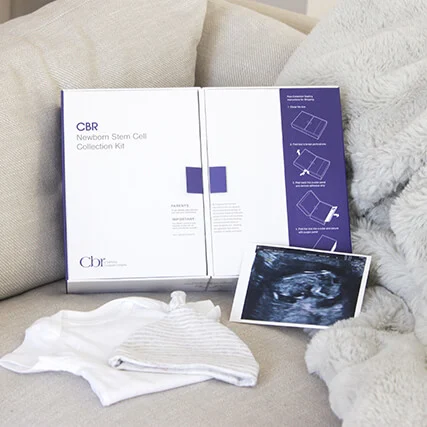
Sign up through our easy enrollment page and the CBR collection kit will be sent to you.
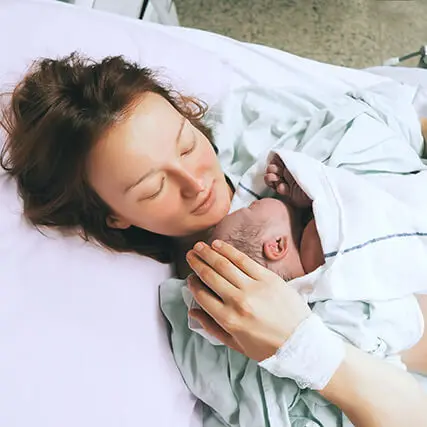
At birth, the umbilical cord blood (and tissue if selected) will be placed into your CBR collection kit.
Your CBR collection kit will be transported securely to our facility for safe storage.
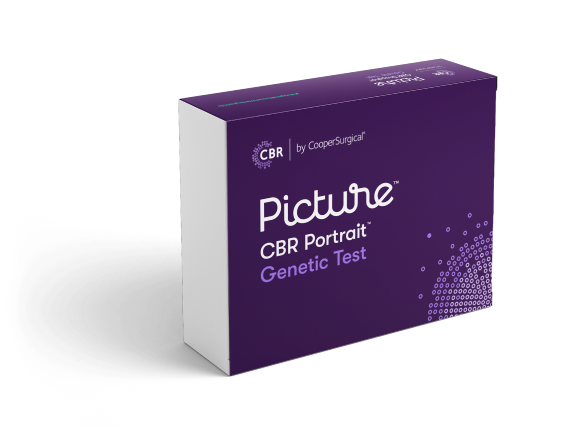
After deciding what newborn stem cells to preserve, explore the genetic testing options we offer that can be added to your service.
Learn about genetic testing >Our state-of-the-art lab offers the highest quality care and protection.
Experts are available to answer all questions.
CBR stores the most newborn stem cell samples in the industry.
Hunter Moore, CBR® patient and ambassador
Lisa and Glenn Moore had every expectation that their son, Hunter, was going to be a healthy baby boy, but they decided to preserve his newborn stem cells with CBR just in case. When Hunter was around 9 months old, they noticed differences in his mobility on the left side of his body. After being diagnosed with cerebral palsy, the cord blood they preserved would be used as part of his treatment.
Patrick Johnson, Justice's dad
After an 18-week anatomy scan revealed that Justice Johnson would be born with hydrocephalus, his parents - Alison and Patrick - began investigating treatment options and made the decision to preserve their baby's newborn stem cells with CBR®.
Armené K., Sasoun's mom
Baby Sasoun was diagnosed with Severe Combined Immunodeficiency Syndrome (SCID). This rare genetic disorder would most likely be fatal within the first year or two of life unless Sasoun received an immune-restoring treatment. Meet the incredible family and watch the story of Sasoun’s remarkable recovery made possible by his older brother’s newborn stem cells.
Sarah Huber, Grace's mom
Grace was born with a condition called sensorineural hearing loss. Because her parents preserved her newborn stem cells with CBR, she was connected to a clinical trial through the Family Health Registry.
Jessica Holemon, Abigail's mom
When Jessica gave birth to her second daughter, Abigail, she banked her newborn stem cells without knowing the health challenges that would lie ahead for her family. Watch how the seemingly simple decision to preserve turned out to make a big difference.